简体中文
简体中文
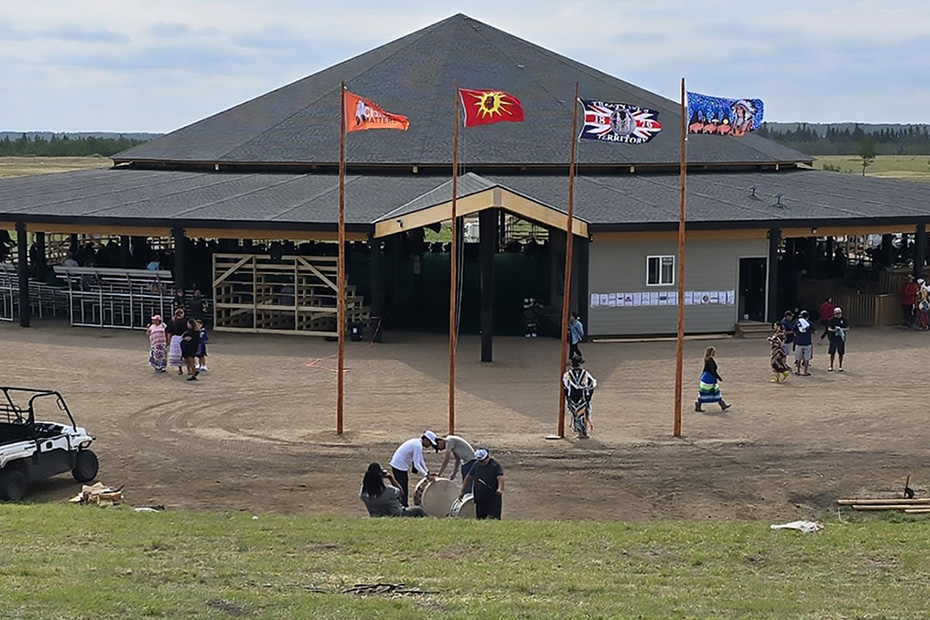
The steady beat of the drum, the sway of regalia and the sound of voices rising together in song filled the air at Ahtahkakoop Cree Nation in Saskatchewan. From August 27 to 29, 2024, the community hosted its first traditional pow wow in more than 40 years, an event that celebrated culture, resilience and movement.
The celebration brought together over 400 dancers from Indigenous communities across Canada and the United States. On the second day, the community initiated 80 youth as dancers – a powerful way to honour the next generation. The pow wow’s tagline, “Awakening Our Spirits,” captured the resilience of the Nêhiyaw (Cree) people in reclaiming traditions that were once forcibly suppressed.
For generations, Indigenous culture faced barriers to survival. The Indian Act, federal legislation that still governs First Nations in Canada – banned traditional dancing, regalia, and ceremonies from the late 1800s through the mid-1960s. Residential schools further disrupted the passing down of language, culture, and teachings. Despite these forces, the spirit of Pwatisimowin (pow wow) endures, and returns today in powerful ways.
Chief Larry Ahenakew of Ahtahkakoop Cree Nation shared how the return of the pow wow was inspired by watching the young matriarchs in his community.
“My granddaughter is 18 years old now, and I’ve watched her dance for 12 years, since she started at the Federation of Sovereign Indigenous Nations (FSIN) Powwow at age 6. When there was intertribal dancing, she would go down and dance every intertribal dance and since then, she has loved dancing. I knew she was meant to dance for the rest of her life. Now all three of my granddaughters dance, which has inspired me to want to build an arbour for them and our youth in our community.”
To make the vision a reality, Ahtahkakoop Cree Nation sought support from RBC to construct an arbour, which is a designated space for important First Nation cultural events and community gatherings where the large, circular structures feature seating areas surrounding an open area.
RBC agreed to help provide financial support and guidance in securing long-term funding. With financing in place, leadership worked with Elders, youth, and industry experts to design and construct the space.
The new arbour showcases impressive state-of-the-art architecture and design with community feedback guiding every detail – from the protective flooring that cushions dancers’ feet to the carefully selected location where a traditional ceremony tipi overlooks the arbour. More than a physical building, the arbour is a space for intergenerational learning, cultural renewal and healing from trauma.
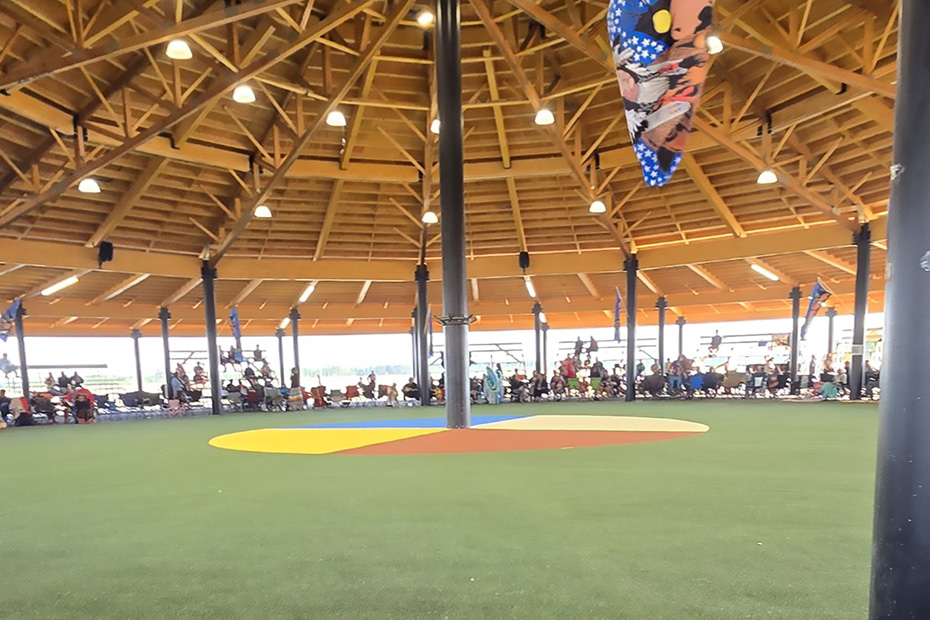 The arbour’s interior showcases traditional architecture with modern amenities for dancers and ceremonies.
“The arbour and pow wow have helped us bring culture back into our community for our youth and Elders,” said Chief Ahenakew. “It’s really successful in our community. It keeps youth busy on weekends and engaged at school. We’ve got many Elders who have started practicing the traditional ways. It’s exciting to see so many Elders willing to help and just pray for the community, come in and dance.”
The inaugural pow wow brought together dancers and community members from neighbouring Indigenous nations, dignitaries from Indigenous Services Canada, mayors from surrounding cities, and industry partners. When all these groups gathered to celebrate Indigenous culture and tradition, it marked a significant milestone on the path toward healing and truth and reconciliation.
RBC received an invitation to participate and take part in the grand entry, which is the ceremonial commencement of a pow wow where dancers, leaders, and Elders enter the space, often led by a flag bearer with a drum group honouring them with a song.
“It was an extreme honour to participate in the grand entry and have them recognize us as a corporation,” explained David Reid, Director, Indigenous Markets for Saskatchewan at RBC. “It was powerful and moving. You could feel the pride and intensity in the community as they brought this tradition back.”
The pow wow also showcased the power of partnership in action. “You could see that anyone involved in the project or who had significant involvement with the community had developed very strong relationships with them,” noted Reid. “It was wonderful to see Ahtahkakoop’s ability to build relationships beyond their community.”
The 2024 Traditional Pow Wow is the first of what will now be an annual event at the Ahtahkakoop Nation’s arbour. This year saw more than 600 dancers take part.
For Chief Larry, the moment was also about carrying forward the vision of past leaders. “Chief Ahtahkakoop’s was one of the main signatories for Treaty 6 in 1876, and he always wanted to instill Cree culture, language and heritage into our community.”
Today, the arbour stands as a living testament to Chief Ahtahkakoop’s vision. The return of the Pwatisimowin (pow wow) represents more than tradition restored – it symbolizes the community’s commitment to âniskô-kiskinwahamâkêwin – the passing on of teachings. As Nêhiyaw (Cree) youth gather around the drum to dance, each step, each beat, and each song reconnects them to their ancestors and ensures that culture continues to thrive for generations to come.
Learn more about RBC Origins
This article offers general information only and is not intended as legal, financial or other professional advice. A professional advisor should be consulted regarding your specific situation. While information presented is believed to be factual and current, its accuracy is not guaranteed and it should not be regarded as a complete analysis of the subject matter discussed. All expressions of opinion reflect the judgment of the author(s) as of the date of publication and are subject to change. No endorsement of any third parties or their advice, opinions, information, products or services is expressly given or implied by Royal Bank of Canada or its affiliates.