简体中文
简体中文
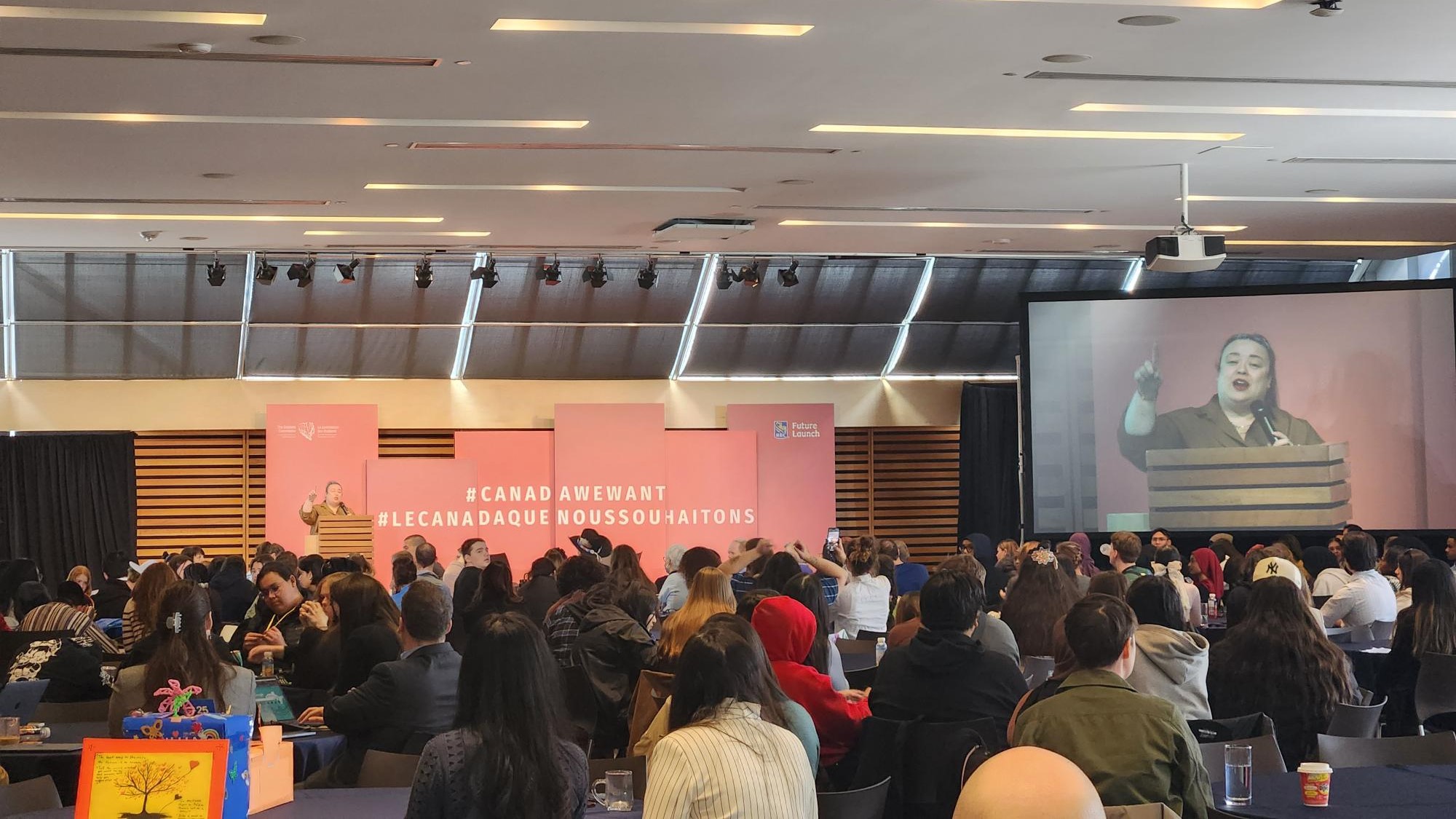
The #CanadaWeWant Conference is an inclusive annual event where youth from across Canada present ideas and solutions to address issues affecting young people today. Hosted by the Students Commission of Canada (SCC) and supported by RBC, the event is both a reminder of the potential and power of youth, and an opportunity to honour it.
RBC’s commitment to Canada’s future
Nine years ago, RBC unveiled its largest commitment to Canada’s future – RBC Future Launch – a $500 million initiative to help young people gain access to skills, job experience, networking solutions and mental well-being support. Over these past nine years, the initiative has engaged over 8 million youth, far surpassing the goal of 3 million. Building on this commitment, RBC recently announced a $2 billion commitment by 2035 to help solve some of the most pressing issues facing society today.
The RBC Purpose Framework, introduced in 2024, is the strategic engine behind these commitments, and reflects RBC’s Purpose of helping clients thrive and communities prosper. The Framework outlines how RBC mobilizes its people, business, operations, and community investments to support Ideas for People and PlanetTM. It aligns to three specific RBC ambitions: Support the transition to a net-zero economy; Equip people with the skills for a thriving future; and Drive more equitable opportunities for prosperity in our communities.
RBC supports many initiatives that bring these ambitions to life – the #CanadaWeWant Showcase is a particularly action-oriented and impactful initiative where Canada’s youth explore ways to bring about positive societal change. On March 5, 2025, students from across Canada participated in the conference, exploring issues that affect them, their peers and their communities – and offered tangible solutions to address them.
The Canada We Want
The #CanadaWeWant Conference is a signature event run by the Students Commission of Canada (SCC) – a for-student, by-student organization founded in 1991 to turn student voice into action. It has since evolved to include all youth – not just students – and has become a force of change.
The conference brings together youth from every province and territory. At least 40% of the conference population is Indigenous, with a high percentage of participants who identify as Black, those from the LGBTQ2S+ community and those from rural remote and northern communities. Youth who experience disability are also well-integrated into the conference.
The purpose is to elevate the voices of those less likely to have a platform and to empower them to have a say in the policies, decisions and changes that will ultimately affect them. This year, the participants explored six themes that reflect issues that matter to them. After five days of work, the youth dove deep into topics they wanted to explore, sharing their findings and recommendations to a room of decision-makers, policymakers, leaders and influencers who can take the ideas and create actual change.
What matters to youth today: 6 themes
At this year’s #CanadaWeWant showcase, six teams presented insights, recommendations and initiatives based on the themes that surfaced as the most relevant and important to them today.
Team 1: Democracy Squad: Youth Civic and Political Engagement
This team’s focus was the critical role youth play in civic and political engagement, both online and offline. It explored how they can bridge social divides, challenge polarization and engage in constructive dialogue, especially in a digital world. Participants discussed strategies for creating meaningful change; from grassroots initiatives to advocacy efforts, and how to strengthen their skills to shape a more inclusive, democratic future.
Team recommendations:
- Empower youth to be more vocal and engaged in political discussions and debates
- Encourage youth engagement so the youth voice is present and appreciated in every space they occupy
“We are living proof that young people are willing to listen and contribute to civic engagement.”
Team 2: I Want It, You Got It: Youth Economic Empowerment
This team focused on the complexities of youth poverty and the challenges of affordability in today’s economic climate. Participants explored ways to build financial literacy, engage peers to share knowledge and identify creative solutions to shift the economic environment for the better.
Team recommendations:
- Schools should establish peer mentorship programs to support youth who lack family or adult support. These programs would involve older youth who have experienced transitioning to adulthood, providing guidance and support
- Advocate for equal opportunities to ensure that no young person is left behind due to lack of resources, support or systemic barriers
- Improve systems to empower youth to succeed. This involves working together to create a community where every young person has the confidence, skills and opportunities to achieve their full potential
“We’re not just the future. We are the present – and the time to build the Canada We Want is now.”
Team 3: Wellness Wanderers: Youth Mental Health & Well-Being
This theme is all about building resilience, developing healthy habits and learning coping skills for life’s challenges. The team explored the root causes of mental health struggles, practical strategies for well-being and ways to support peers. They also looked at ways to help people speak up, advocate for better mental health resources, challenge stigma and make sure everyone has access to the support they need.
Team recommendations:
- Introduce a mandatory and dedicated mental health class that stands apart from existing subjects like gym and sex education to provide students with knowledge, coping strategies and emotional intelligence
- Every school in Canada to have a designated safe space room where students can breathe, decompress, meditate, pray, smudge, talk to someone or simply find a moment of peace
- Redesign psychiatric treatment to promote holistic healing, not just clinical care
“The Canada We Want has healthy, supported youth ready to lead. The Canada we deserve has a strong, resilient community for everyone. The Canada we need has mental health resources for all.”
Team 4: Buzz Off: Substance Abuse and Systems Change
Substance misuse impacts individuals, families and entire communities, making prevention and support crucial. This theme explores the issue from three angles: individual, social and system wide. Team members discussed healthy decision-making, the power of support networks and advocacy for policy changes that promote healthier communities.
Team recommendations:
- Substance abuse courses in school where students learn about various substances and their effects, what happens when people fall into addictions and struggle to regain control, and how to support loved ones struggling with substance misuse
- Flexible curriculums that respect the learning needs of all students
- Teachers who are willing to meet students where they are, without judgement
- Education that is centred in Indigenous ways of knowing and learning, enabling youth to connect with nature and the environment
“The Canada We Want offers community solutions to the epidemic of substance abuse worked around supporting thoughtful, flexible and transparent education – where you can be met without judgement.”
Team 5: Go Green or Go Home
The environment isn’t just about nature – it’s a key part of solving many of the challenges we face today – from affordability to mental health. This theme explores how climate action and sustainability can drive both environmental and economic solutions. Team members discussed systemic changes needed to shift toward a sustainable economy and ways for youth to lead the way in advocating for and driving these changes.
Team recommendations:
- Establish a youth-led environmental action plan to help advance the UN Sustainable Development Goals
- Promote climate education to raise youth awareness of climate conditions, renewable energy resources and destigmatizing the use of nuclear energy
- Raising wages to ensure youth can afford a good quality of life
- Expand green job opportunities across all industries
“Children and youth want to contribute to their communities, but the rising cost of living and the lack of social and economic support prevents them from fighting for their fundamental rights, which includes access to clean water, nutritious food and a healthy environment.”
Team 6: We Listen and We Don’t Judge
Healthy relationships are the foundation of thriving communities, but navigating gender roles and expectations can sometimes be challenging. This theme focuses on building respectful, supportive relationships by exploring how different perspectives influence our interactions. Team members dove into the importance of consent, communication and emotional intelligence in building meaningful, supportive connections.
Team recommendations:
- Incorporate lessons about healthy relationships in school to bring awareness of what a thriving connection can look like
- Offer classes that teach people how to identify misinformation
- Use social media as a platform to broadcast information to a wider group of people to make education about healthy relationships more accessible
- Recognize different cultures and how they affect receptiveness
“Healthy relationships are not possible without an established sense of individualism, practical skills such as financial literacy, independent living and emotional maturity.”
The Canada We Want is possible
As Sharif Mahdy, Chief Executive Officer of the SCC stated at the conference, “the Canada We Want is possible. A place where difference pulls us together, a place where youth voice is celebrated. In working in partnership with young people, we can make the change happen.”
Indeed, when youth have a seat at the table, bold ideas, strong initiatives and effective programs can emerge, grow and drive lasting positive change.
This article offers general information only and is not intended as legal, financial or other professional advice. A professional advisor should be consulted regarding your specific situation. While information presented is believed to be factual and current, its accuracy is not guaranteed and it should not be regarded as a complete analysis of the subject matter discussed. All expressions of opinion reflect the judgment of the author(s) as of the date of publication and are subject to change. No endorsement of any third parties or their advice, opinions, information, products or services is expressly given or implied by Royal Bank of Canada or its affiliates.