简体中文
简体中文
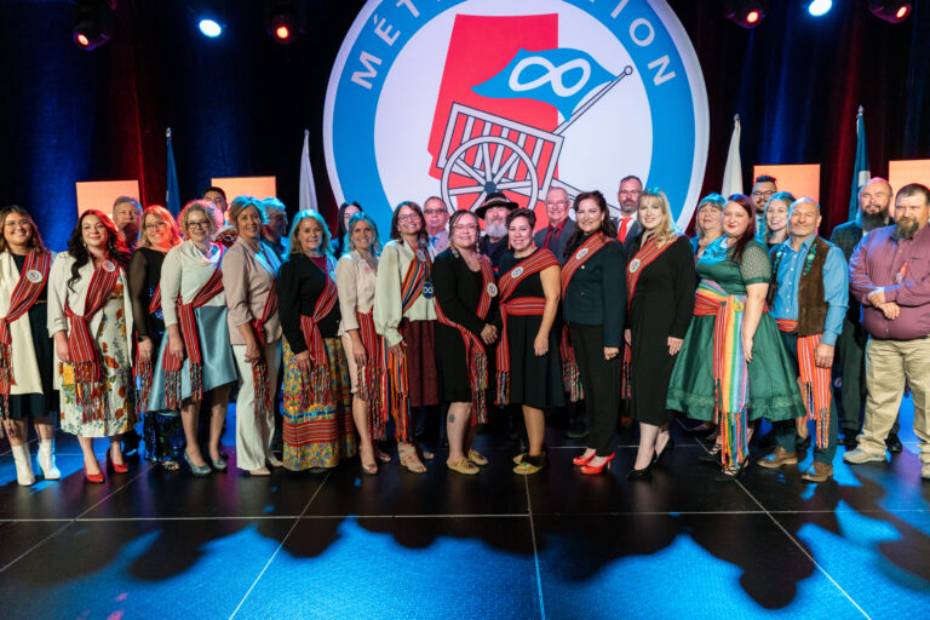
This year’s A Chosen Journey: RBC Indigenous Partnership Report is a celebration of the promise, excellence and talent in Indigenous communities, the impact organizations, communities and community members are making and the power of teamwork. From the forests to the velodrome to the Arctic Circle and everywhere in between, our community partners are finding new ways of winning and protecting traditional ways of being. This story is an excerpt from this report.
2023 was a big year for the Métis Nation of Alberta. They ratified their new constitution in a province-wide referendum, establishing the Otipemisiwak Métis Government. “Going through the constitution ratification process energized our Nation. It became the largest Indigenous constitution and self-government vote in Canadian history. Over 15,000 Métis Nation of Alberta citizens came out to vote, which is unheard of. That was a massive undertaking, but also a significant achievement with the result of 97% voting unequivocally in favour of the constitution and our Nation’s path towards self-determination and self-government,” explains Garrett Tomlinson, Senior Director of Self-Government with the Métis Nation of Alberta.
“This type of representation is so meaningful for many of the Métis people,” says Kurt Seredynski, Vice President, RBC Commercial Financial Services, Edmonton West. “It’s important to acknowledge and celebrate this monumental step in the journey towards self government, that’s a generational transformation for the Métis.”
“RBC has been our financial institution of record for as long as I can remember and I’ve been involved with the Métis Nation government since I was a local vice president in my community as a teenager. We regard them as a stalwart partner, and they’ve been great working with and advising the Nation on our financial needs and goals. It’s just been phenomenal to work with RBC up to now,” Tomlinson recalls.
“We’ve really been fighting for self-government for our entire existence; it has been going on for a few hundred years,” Tomlinson continues. A 2019 self-government recognition agreement with Canada required the Nation to develop and pass their own constitution, which happened in 2022. Following a new 2023 self-government agreement, the next step is for federal recognition legislation to pass, something in the works with Bill C-53 — “an Act respecting the recognition of certain Métis governments in Alberta, Ontario and Saskatchewan, to give effect to treaties with those governments and to make consequential amendments to other Acts” — which is before Parliament. The intended result is the Nation taking jurisdiction over areas of importance for their people.
“It’s just such a huge opportunity for our Nation to step forward in self-determination with the recognition of Canada as a partner, as opposed to an adversarial way,” Tomlinson beams.
From justice reform, economic and socioeconomic empowerment to child welfare, there are so many opportunities for the Nation to take charge. Moving resources from the national capital region to the Nation to be managed locally by people who truly understand what’s needed also creates local jobs for people with their fingers on the pulse of the community’s priorities.
Following the success of the vote, Tomlinson is full of hope. “If there was one message I can give to folks about self-government, it’s that reconciliation works when we’re all pushing and pulling in the same direction, and it works to everyone’s benefit in most cases,” he concludes.
The Nation sees more opportunities for independence on the horizon. In Tomlinson’s words, he and his team are “taking charge of the future after all the struggles of the past,” working towards better days, not just for the Métis people in Alberta, but also for Canadians.
This article offers general information only and is not intended as legal, financial or other professional advice. A professional advisor should be consulted regarding your specific situation. While information presented is believed to be factual and current, its accuracy is not guaranteed and it should not be regarded as a complete analysis of the subject matter discussed. All expressions of opinion reflect the judgment of the author(s) as of the date of publication and are subject to change. No endorsement of any third parties or their advice, opinions, information, products or services is expressly given or implied by Royal Bank of Canada or its affiliates.